
Most people on the Eastside have driven past Beaux Arts Village a hundred times without knowing it’s a town.
It sits on the eastern shore of Lake Washington, just north of where the East Channel bridge carries I-90 across the water. You can be standing in Bellevue, take a few steps, and be in a different municipality with its own mayor, its own water system, and its own rules. Around 300 people live there. It’s one of the smallest incorporated towns in Western Washington, and it has been quietly doing its own thing since 1908.
We’ve built in a lot of Eastside neighborhoods. Beaux Arts isn’t like the others, and I want to explain why, because the difference matters if you ever find yourself thinking about living there.
“You can be standing in Bellevue, take a few steps, and be in a different municipality.”
A Town Run by the People Who Live in It
Beaux Arts Village was founded in 1908 and incorporated as a town in 1954. The streets are narrow and tree-lined. The homes are an eclectic mix, new next to vintage, modern next to old-fashioned, in a way no master-planned development would ever allow.
Residents call themselves Villagers, and they have since well before incorporation.
Here’s the part that surprises people. The town is genuinely self-governed by the people who live in it. The mayor is your neighbor. Town hall happens in a neighbor’s living room. The town owns and maintains its own water system, including its own water tower, and bills residents for it directly. Fire service and sewer and storm come from West Bellevue, but a remarkable amount of this town runs on Villagers showing up.
I’ve heard it described as an HOA on steroids. That’s funny, and it’s not quite right. An HOA is a set of rules handed to you. This is closer to a town small enough that everyone has to participate.
The Beach, and Why Everyone Has a Golf Cart
Every property owner in Beaux Arts is automatically a member of the Western Academy of Beaux Arts, known as WABA. WABA owns and maintains 1,100 feet of Lake Washington waterfront along the western edge of town, held for members and their guests.
That’s not a rocky strip of shoreline. It’s the largest private beach on Lake Washington: sandy swimming area, boat moorage and marina, tennis courts, fire pits, and a playground. It serves as the main park inside the town’s boundaries, and it’s maintained by resident volunteers.
It’s also why so many households here own a golf cart. The streets are narrow, the distances are short, and a golf cart is honestly the most sensible way to get down to the water with towels and coolers and a couple of kids. That’s a real design consideration for anyone building in the Village, and I’ll come back to it.
“It’s the largest private beach on Lake Washington, and it’s maintained by the people who live there.”
What It Actually Feels Like
The closest comparison I have is Bridal Trails, minus the horses. A park inside a city. Houses tucked back under heavy tree cover, very private, very Northwest. There’s a national-forest quality to it that’s hard to square with being minutes from downtown Bellevue and a bridge ride from Seattle.
For families planning ahead, the schools are Enatai Elementary, then Chinook Middle, then Bellevue High.
Building Here Is Not Like Building Anywhere Else
Now let me be honest about the work.
A 300-person town with its own government means its own review process. And the lots themselves are demanding. Tree protection is taken seriously here, and on a heavily wooded lot that can mean excavating with vacuum trucks instead of a backhoe, removing soil with air so the root systems come through intact. Topography is rarely simple. Lot coverage limits are hard constraints, not suggestions.
None of that is a complaint. It’s the reason the Village looks the way it does, and it’s why homes here feel settled into their sites instead of dropped onto them. But it does mean building in Beaux Arts rewards a builder who plans around the constraints from the first sketch, and punishes one who discovers them halfway through.
The Hawthorne, and the Last One We’ll Build Here
Which brings me to the home we’ve designed for the Village. We call it the Hawthorne.
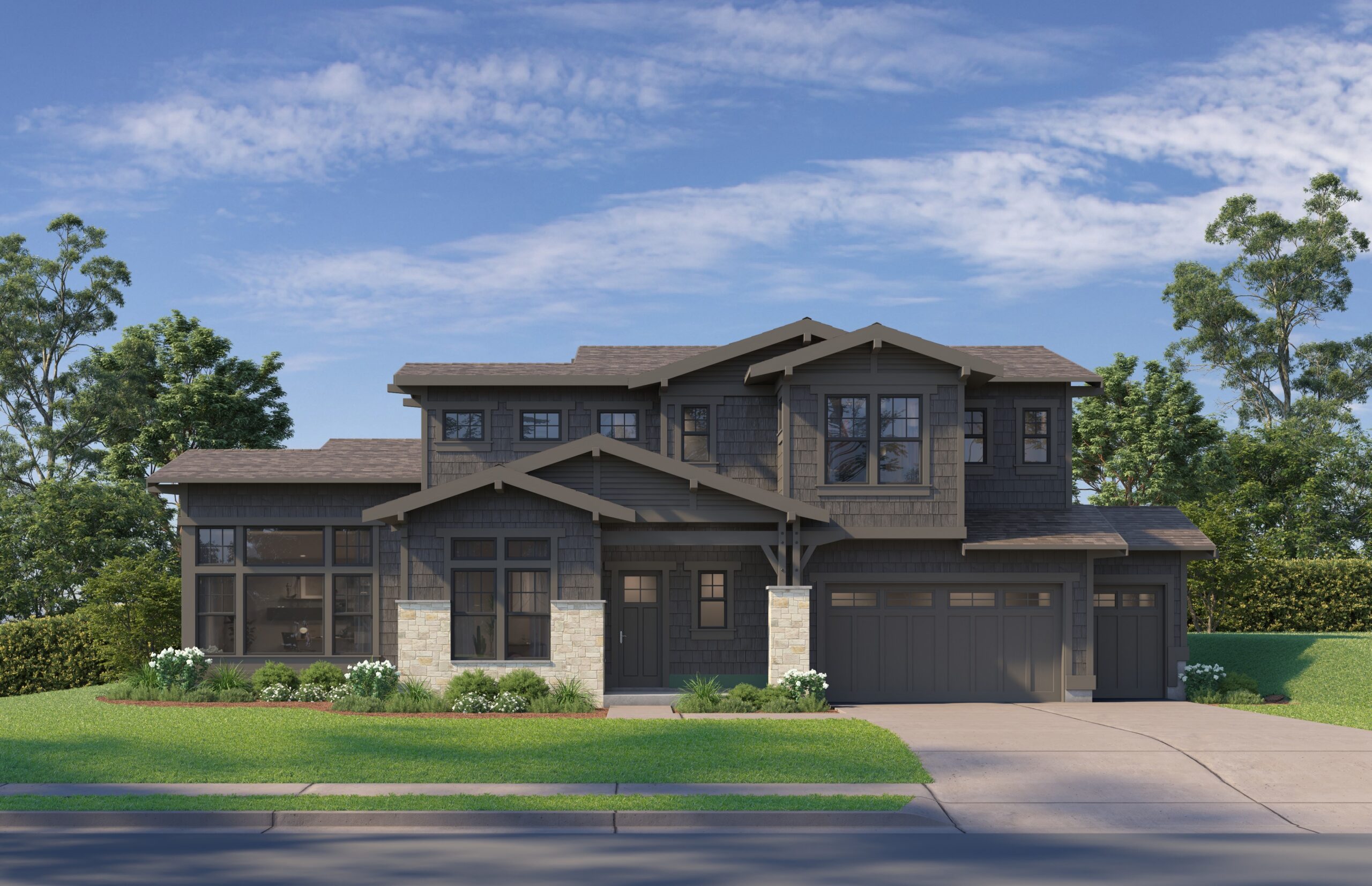
It’s a five-bedroom on a private, heavily wooded lot, roughly 4,500 square feet above grade, and it was drawn around how people actually live in this town.
The garage sits on the main level, so there are no steps to get into the house. Two bays for cars, plus a third sized for a golf cart. That third bay started as a lot coverage constraint and turned into one of my favorite things in the whole home, because it’s the Beaux Arts detail nobody from outside the Village would think to include.
Inside, a walk-in pantry doubles as a prep kitchen. Three-panel doors open to the outside from both the kitchen and the great room, so the entire main floor can open up on a summer evening. Upstairs is the primary plus two bedrooms, with a stunning primary bath and closet, and laundry on the same floor.
The basement is the part I’d show you first: a bedroom with its own ensuite, a dedicated workout room with a real window, a game room with a wet bar, a media room with no windows at all for proper movie watching, and serious storage. It’s a teenager hangout house, and I mean that as the highest compliment I can give a floor plan.
Outside, it’s dark brown shingle with natural stone columns and heavy beams across the front. Northwest lake house, on a lot that reads like a forest.
Our architect is Dan Brobst of Brobst Design Works, who has drawn every recent Mirikeen home and has largely stopped taking outside clients.
“There isn’t another lot coming. In a town of 300 people where almost nothing changes hands, that’s just how it works.”
Here’s the thing about the Hawthorne I keep coming back to. It’s the last home Mirikeen will build in Beaux Arts Village. There isn’t another lot coming. In a town of 300 people where almost nothing changes hands, that’s just how it works.
If the Village Is on Your List
If you’ve ever crossed the East Channel bridge and wondered about the trees on the other side, it’s worth a real look. Beaux Arts Village is a genuinely unusual place to live on the Eastside, and there is no version of it anywhere else on the lake.
If you want to know more about the Village, or about the Hawthorne, reach out and I’ll tell you everything I know.
Lindsey Kull, Mirikeen Homes

