Architectural Storytelling in a Kirkland Custom Home
Some homes announce themselves. The Lightwell — a Mirikeen Homes original in Kirkland’s Houghton neighborhood — does something subtler and more lasting: it draws you in, then makes you want to stay. The name is not incidental. This is a house built around light, organized by it, and ultimately defined by the quality of it at every hour of the day.
The design language is a precise collision of two traditions: Japanese wabi-sabi, with its reverence for natural materials, honest imperfection, and the beauty of things made to last; and midcentury modern, with its conviction that architecture should serve living rather than impress it. What Mirikeen built at the Lightwell is a home where both of those ideas are present not as stylistic references but as structural commitments — decisions that shaped the floor plan, the material palette, and the way the house holds light from the first sketch to the final walkthrough.
The Entry Sequence: A 10-Foot Pivot Door and a Floating Staircase
The design process for the Lightwell began not with a style in mind, but with a site and a set of questions: What does this lot want to be? What does a family living here actually need? The answers accumulated over a design charrette that moved from paper sketches to 3D modeling, and the home’s character emerged from that process rather than being imposed on it.
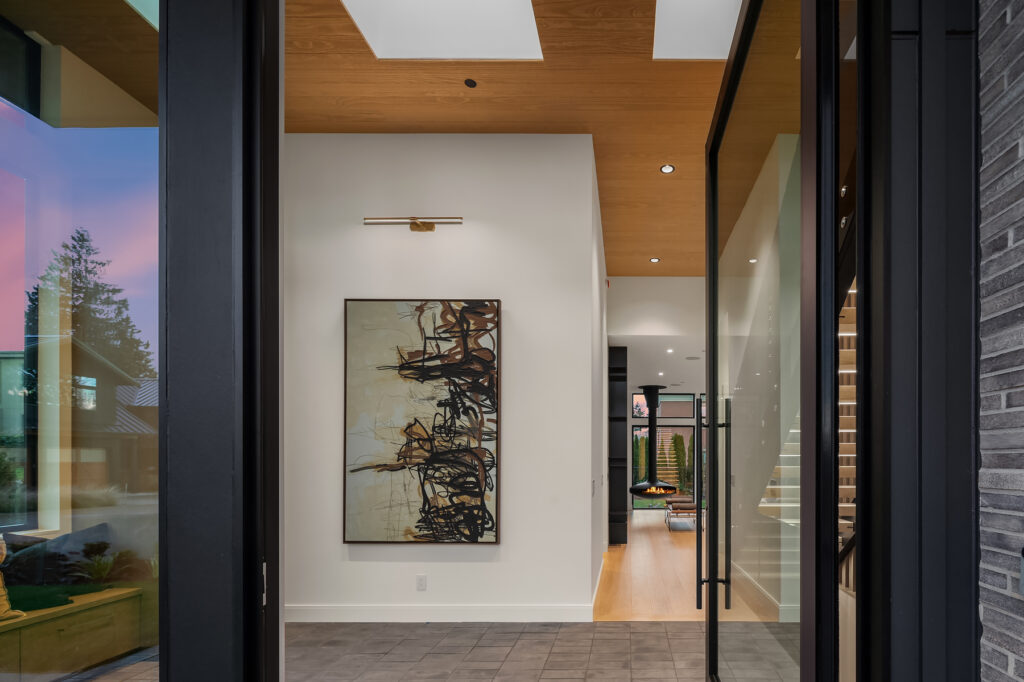
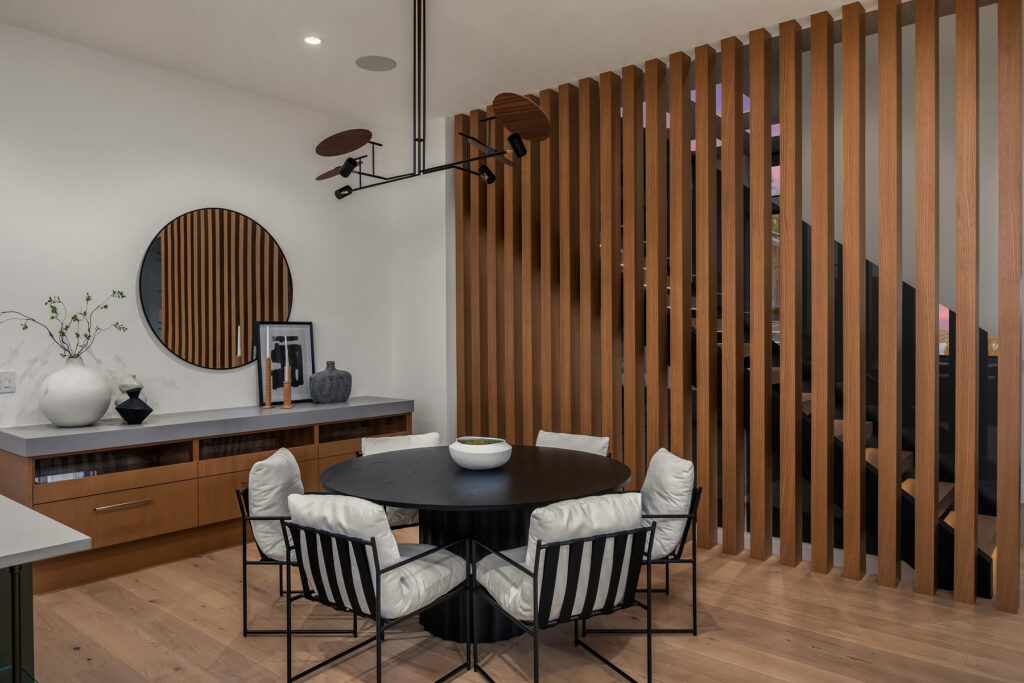
The entry makes that character legible immediately. A 10-foot glass pivot door — oversized, precise, and demanding — swings open to reveal a soaring foyer and, above it, a custom steel-and-glass floating staircase ascending toward the light. Nineteen skylights are distributed across the home, several concentrated above the staircase, creating a lightwell in the most literal sense: a vertical column of natural illumination that changes quality and direction throughout the day. The effect is not decorative. It is the thesis of the entire design.
Architecture, at its most essential, is a box with holes in it to admit light. At the Lightwell, Mirikeen took that principle seriously enough to organize the entire plan around it — ensuring that the kitchen, the living and dining spaces, and every bedroom upstairs all have genuine access to natural light and meaningful views of the surrounding landscape.
“What made his vision unique was the personal component to it—there was a legacy that he was trying to honor. It gave us a little bit more freedom to explore things that were beyond just a typical or standard investment property build,” Jen Kowalski, Six Walls Interior Designs.
The Great Room: A Suspended French Fireplace and the Art of Dramatic Restraint
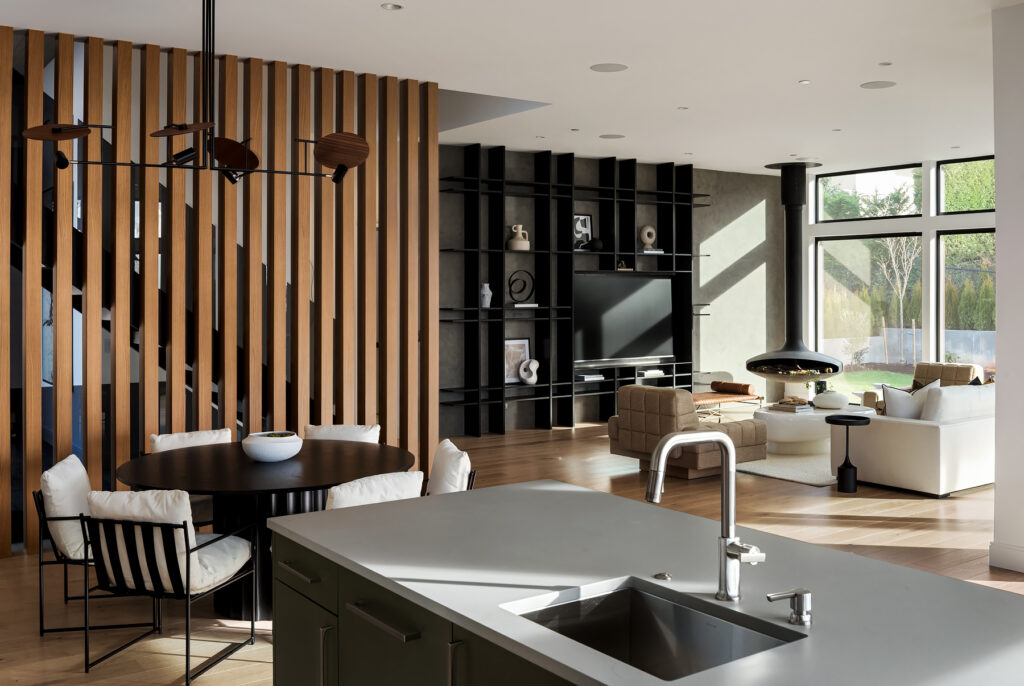
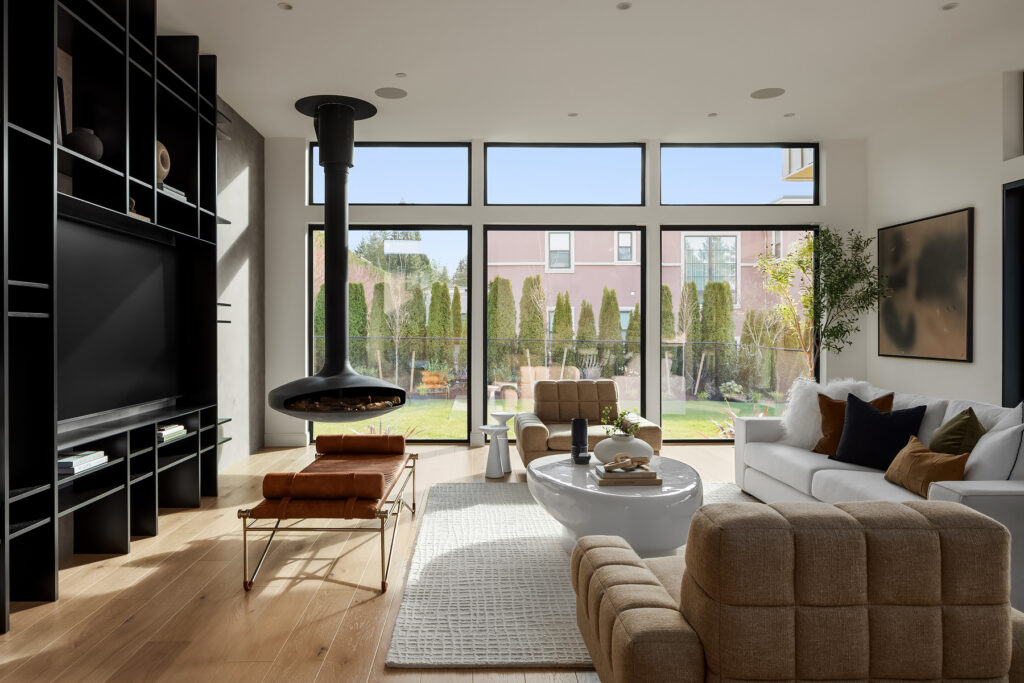
The great room is where the Lightwell’s design philosophy becomes most visible. A suspended gas fireplace — imported from France and, at the time of installation, the first of its kind in Kirkland — floats in the space against a Roman clay accent backdrop, flanked by custom steel and wood built-ins. The fireplace is not a standard specification item; it was sourced specifically for this home after Mirikeen identified it as the right piece for the design and committed to making it work in a market where no one had done it before.
The design principle at work here is one of dramatic balance: find the elements worth making dramatic, then support them with materials and surfaces calm enough to let the drama register without overwhelming the room. Roman clay is ideal for this — its matte, textured surface absorbs light rather than reflecting it, giving the fireplace wall a presence that recedes and advances depending on the time of day. The custom steel and wood built-ins carry the same logic: precise enough to read as architectural, warm enough to feel residential.
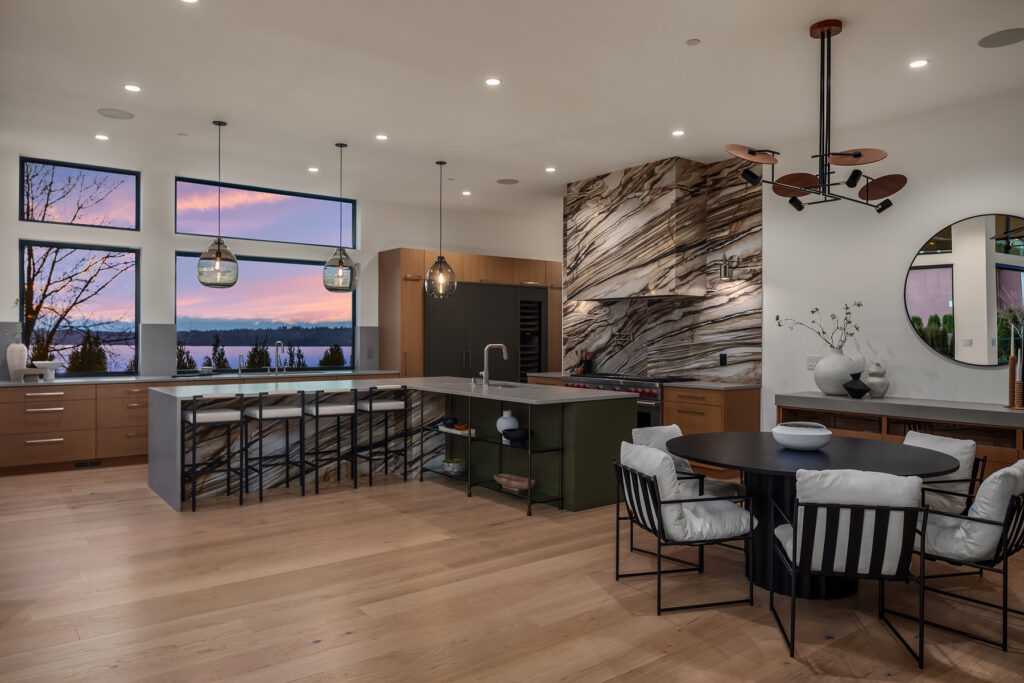
The kitchen, which opens to the great room in a continuous flow, is built for serious use. Wolf and Sub-Zero appliances anchor the professional specification: a 60-inch dual-fuel range, 84-inch integrated refrigeration, and a dramatic stone slab backsplash that makes the kitchen as visually resolved as it is functional. The slab selection follows the wabi-sabi logic of the broader design — natural veining, material depth, nothing that pretends to be something it is not.
The Main Level: Indoor-Outdoor Living and a 14-Foot Ensuite
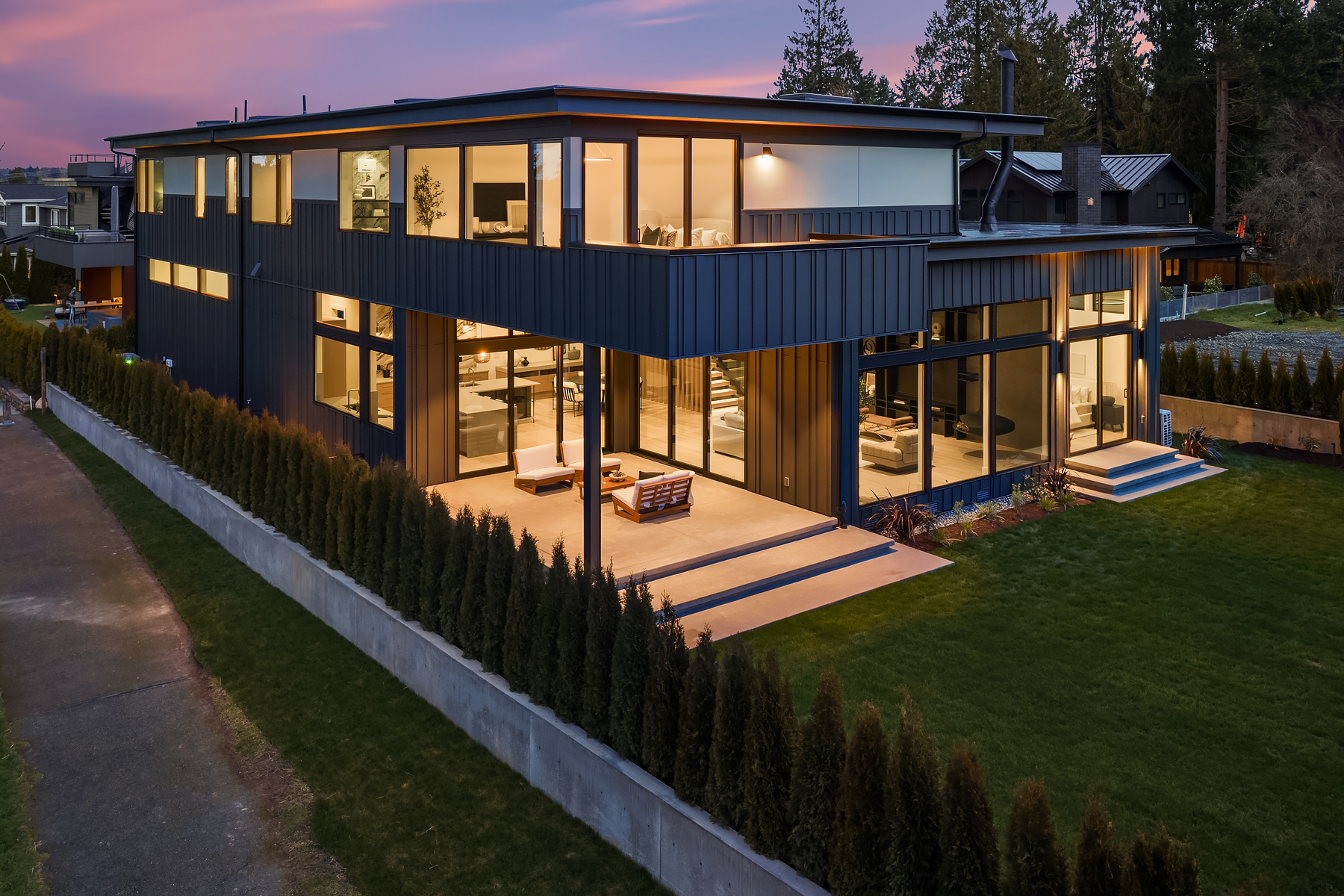
The Lightwell’s main level opens to the outside through two multi-slide doors that dissolve the boundary between the covered patio and the great room. The outdoor program — landscaping, lighting, and irrigation — was designed in relation to the home’s architecture rather than after it, so the transition between inside and out reads as intentional rather than incidental.
A main-floor ensuite with 14-foot ceilings and a private bath adds flexibility rarely found in single-family spec construction: it can function as a guest suite, a home office with sleeping capability, or a main-level primary for multi-generational households. At 14 feet, the ceiling volume alone signals that this room was not designed as an afterthought.
Upstairs: A Skylit Gallery, Sweeping Views, and an Ann Sacks Spa Bath
The upper level is reached via the floating staircase and announced by a skylit gallery — a transitional space that prepares you for what comes next. The primary suite at the end of that gallery has sweeping views and a private balcony, connecting the interior to the landscape in the most direct way possible.
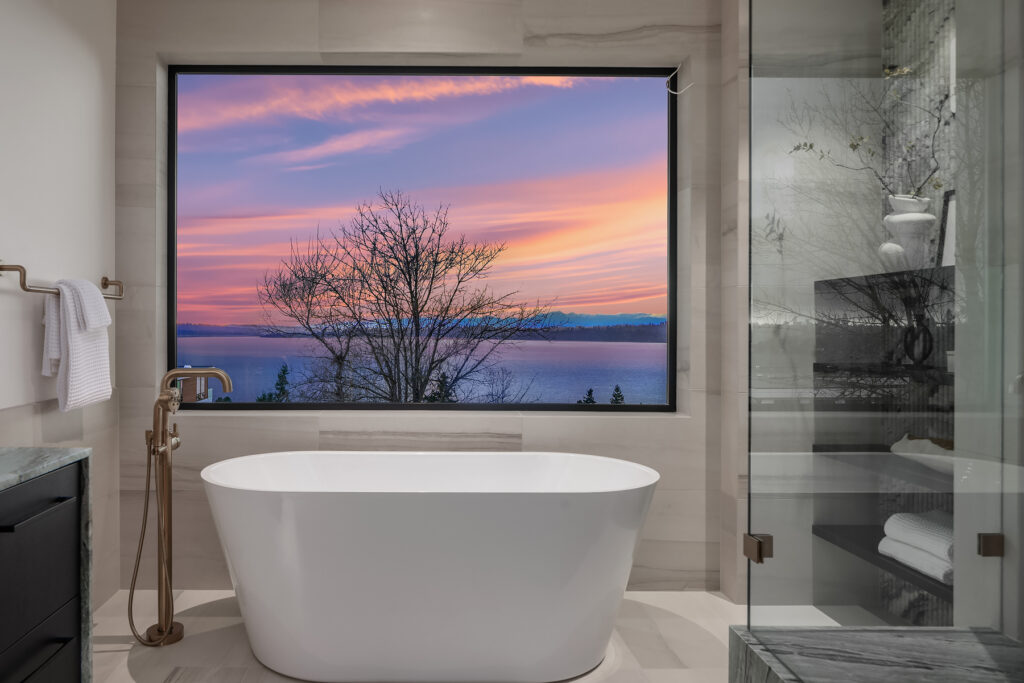
The primary bathroom is designed around Ann Sacks fluted marble in Nubo Verde — a stone chosen for its rich color, deep veining, and the way it carries the home’s material commitment to natural surfaces into the most private room in the house. A curbless shower, soaking tub, and heated floors complete the program. Nearly every bedroom in the Lightwell is ensuite, all with heated floors — a specification decision that elevates daily living in a way that does not photograph well but is felt every morning of every winter.
Lower Level and Systems: Depth Below Grade, Intelligence Throughout
The lower level provides a media lounge with kitchenette — a space designed for extended use that keeps a household from feeling compressed on its primary floor. Throughout the home, smart lighting and whole-home audio are fully integrated, with the system pre-wired for automated shades and security. A 21kW generator ensures the home’s systems remain continuous regardless of grid conditions. A three-car garage completes the program.
The Design Principle That Holds It Together
The Lightwell was built from a conviction that a home should make you want to stay in it — that the best measure of residential architecture is not the photograph it produces but the feeling it sustains over years of daily living. Mirikeen designed and built this home with that measure in mind: not starting with a style and filling it in, but arriving at a style by responding to the site, the program, and the specific combination of wabi-sabi reverence for material and midcentury commitment to livability that this home called for.
The result is a luxury custom home in Kirkland that is unmistakably specific — to its neighborhood, to its design lineage, and to the standard Mirikeen holds for every project it puts its name on. If you are considering a custom home on Seattle’s Eastside, we would welcome the conversation. Contact Mirikeen Homes to begin.